

Why a Smart-Card Cold Wallet Might Be the Best Move for Your Crypto
Whoa.
Okay, so check this out—I’ve been fiddling with hardware wallets for years, and smart-card solutions keep pulling at my attention. My first impression was skeptical. Seriously? A credit-card-sized chip for millions of dollars worth of value? But then I tried one and somethin’ felt off in a good way. Initially I thought cold storage meant bulky devices, cables, and a tiny screen that made you squint. Actually, wait—let me rephrase that: cold storage usually meant exactly that, until smart-cards arrived. On one hand they look like a toy. On the other, they behave like a vault with a very friendly face.
Here’s the thing. The core idea of cold storage hasn’t changed—keep private keys offline, away from the internet and prying eyes. Hmm… but the form factor matters. Portability, durability, and user experience all tilt the balance between «I should use cold storage» and «I never bothered.» My instinct said that people will adopt what’s easy, not what’s theoretically superior. So the UX has to be straightforward. And for everyday folk who want a practical layer of security without turning their phone into a paper wallet shrine, smart-card wallets hit a sweet spot.
Short story: smart-card cold wallets combine the tamper-resistant chip technology you trust with a near-zero learning curve. They are small, no batteries, and they feel familiar in your pocket. I like that. But let’s slow down and walk through the trade-offs, because there are nuances and I’m not handing out unconditional endorsements.
First, threat modeling matters. Are you protecting from casual theft, targeted physical coercion, or nation-state actors? Each scenario demands a different setup. For casual theft, a smart-card plus a mobile app is more than enough. For strong adversaries you might layer passphrases and seed backups and accept reduced convenience. On the other hand, some people over-engineer and end up not using anything at all. That bugs me.
Security architecture is elegant here: private keys never leave the chip. Medium complexity, easy explanation, high trust. The chip signs transactions internally and exposes only necessary data to the phone app. But user behavior is the real wild card. People reuse passwords, write seeds on napkins, or store recovery data in cloud notes for «easy access.» Not smart. I’m biased, but modern smart-card designs help reduce these common mistakes.
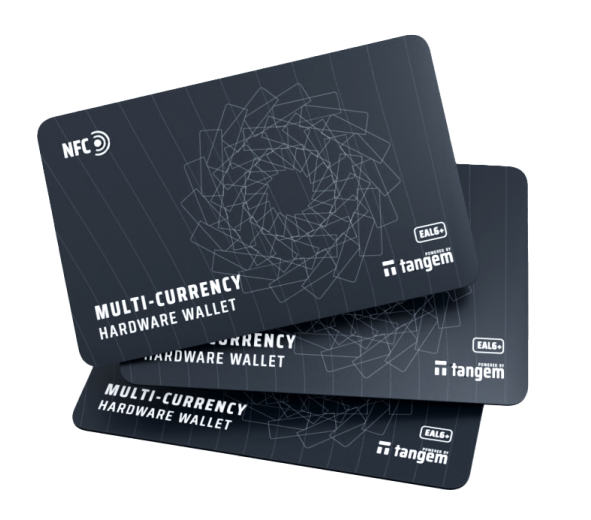
Check this out—there’s a specific brand I keep pointing friends to when they ask for a practical smart-card option. The tangem wallet is a clean example of the concept baked into a consumer-ready product. It’s not perfect, though. There are usability quirks and model differences that matter depending on which coins you hold.
On integration: smart-cards pair with mobile apps over NFC, which is convenient. Tap the card, approve the transaction on the phone, and the chip signs it. No cables, no drivers, no awkward dongles. That simplicity lowers friction. Yet simplicity can hide critical choices—like how backups are handled or whether the card supports multi-account hierarchies. Those are important if you manage many assets across chains.
People often ask about seed phrases. Here’s the rub: many smart-card solutions opt to store keys without exposing a seed phrase at all. That can be great for non-technical users. But it also changes your backup strategy. If your single card is lost and you didn’t provision a backup card or another recovery method, recovery becomes impossible. So, plan. Seriously. Use a redundant scheme if you care about access continuity.
Think of a few practical scenarios. You are a traveler and want to check balances on your phone without risking keys on an internet-connected device. Smart-cards are ideal. You are an investor with long-term holdings and want air-gapped signing for rare transactions—again, a solid fit. If you need frequent on-chain interaction with DeFi dApps, the phone-first workflows may feel clunky. On the other hand, you can still keep large sums offline and use a separate hot wallet for day-to-day trades. It’s a balance.
Durability is underrated. A smart-card is closer to the lifespan of credit cards or a metal keycard, and many are rated to resist bending and humidity. That matters more than we admit. People store plastic cards in wallets for years without worry. A well-manufactured smart-card tolerates that lifestyle. But don’t treat it like an iron-clad object—physical harm, like being run over by a car or chewed by a dog, will still break things. It happens.
On attack vectors: NFC replay, side-channel attacks, and supply-chain tampering are the headline risks. Manufacturers mitigate these with secure elements and strict manufacturing controls. Still, no system is invulnerable. My working assumption is to treat the card as one component in a layered security approach. Use passphrases, multiple cards, and safe storage practices as needed. This is not a single-point silver bullet.
Regulatory context in the US is evolving and can influence custody options for corporate users. If you’re a business holding crypto, smart-cards work for keys but may need to be wrapped within documented custody policies. Individuals care less about formalities and more about practical safety. That gap between enterprise and consumer needs creates a space where smart-cards excel—consumer simplicity meets strong crypto primitives.
Often, the debate narrows to convenience versus control. Smart-cards skew toward convenience without totally sacrificing control. You get offline private key protection with consumer-friendly UX. But remember that the mobile app ecosystem matters a lot. A great card with a poor app is a bad experience. Choose a solution whose app is audited and maintained. Check community feedback, and don’t rely only on marketing claims.
Okay—some quick tips if you’re considering a smart-card cold wallet. First, buy from reputable sellers and avoid second-hand units. Second, test your backup and recovery flow right away, before you move significant funds. Third, consider a multi-card backup plan so loss or damage won’t leave you locked out. Fourth, update firmware only from official sources. Fifth, treat the card like cash—you wouldn’t mail your wallet across town, right?
There’s also an accessibility angle. Smart-cards tend to be friendlier for non-technical people. You can hand a spouse or partner a backup card with simple instructions. That social usability is often overlooked in crypto circles obsessed with pure security. It matters—real adoption requires designs that real humans will use correctly.
I’ll be honest though: nothing is perfect. Some coins and features are less supported on certain smart-card models. Upgrades in chain standards, like EIP-4337 or newer multi-sig schemes, can lag in hardware support. If you rely on cutting-edge DeFi primitives, check compatibility first. I’m not 100% sure every new standard will be smoothly integrated right away, so expect occasional friction.
On cost: smart-card wallets are generally affordable compared to elaborate hardware devices. That lowers the barrier to entry. But price shouldn’t be the only metric. Evaluate support for your assets, the recovery model, and the company’s track record. Cheaper is tempting, but cheap-and-unsupported is a risk.
Finally, there’s a human element that no spec sheet captures. When I handed a smart-card to a skeptical friend and watched their relief when they saw how easy it was to use, I realized adoption isn’t just technical—it’s emotional. Trust grows when people can actually use the security rather than merely admire it. That shift is why I think smart-card cold wallets will become a mainstream tool for personal custody.
How to Choose and Use a Smart-Card Wallet
Start with compatibility. Make sure the card supports the chains you hold and that the mobile app is solid. Then think about recovery and backups. I recommend at least one redundant card and an encrypted backup of configuration details stored offline. If you want an example to examine, check out the tangem wallet for a practical implementation that many users find approachable. Try small transfers first, validate the flow, and then increase amounts.
Keep your backup strategy simple but robust. A single-rule backup often fails when humans are involved. Use multi-card backups, safe deposit boxes, or a trusted custodian for parts of your recovery if you need extra redundancy. And document your plan in a way someone else could follow if you were unavailable. That part feels boring but it’s crucial.
FAQ
Are smart-card wallets truly air-gapped?
They keep private keys offline because signing happens on the chip. The device pairs with a phone to transfer signed transactions, so the key material never leaves the card. That said, the phone still sees transaction details and must be trusted to present them honestly. So they’re not a perfect isolation of the entire signing workflow, but they are functionally air-gapped regarding private key exposure.
What if my smart-card is lost or damaged?
If you followed a multi-card or backup plan you’ll be able to recover. If your setup relied on a single card with no backup, recovery may be impossible. That’s why testing and redundancy are very very important.
Can I use a smart-card for frequent DeFi activity?
Yeah, but it gets tedious if you need to approve many tiny transactions. A practical approach is to use a hot wallet for day-to-day interactions and keep cold storage for long-term holdings. That hybrid model balances convenience and security.